Home Milestones & Updates Keeping the Living Traditions Alive: Culture and Craft at Punyabhoomi
The Punyabhoomi Journal
Keeping the Living Traditions Alive: Culture and Craft at Punyabhoomi

Stone carvers, classical artists, storytellers and gurukul learning — Punyabhoomi is envisioned as a working home for the parampara, not a museum of it.
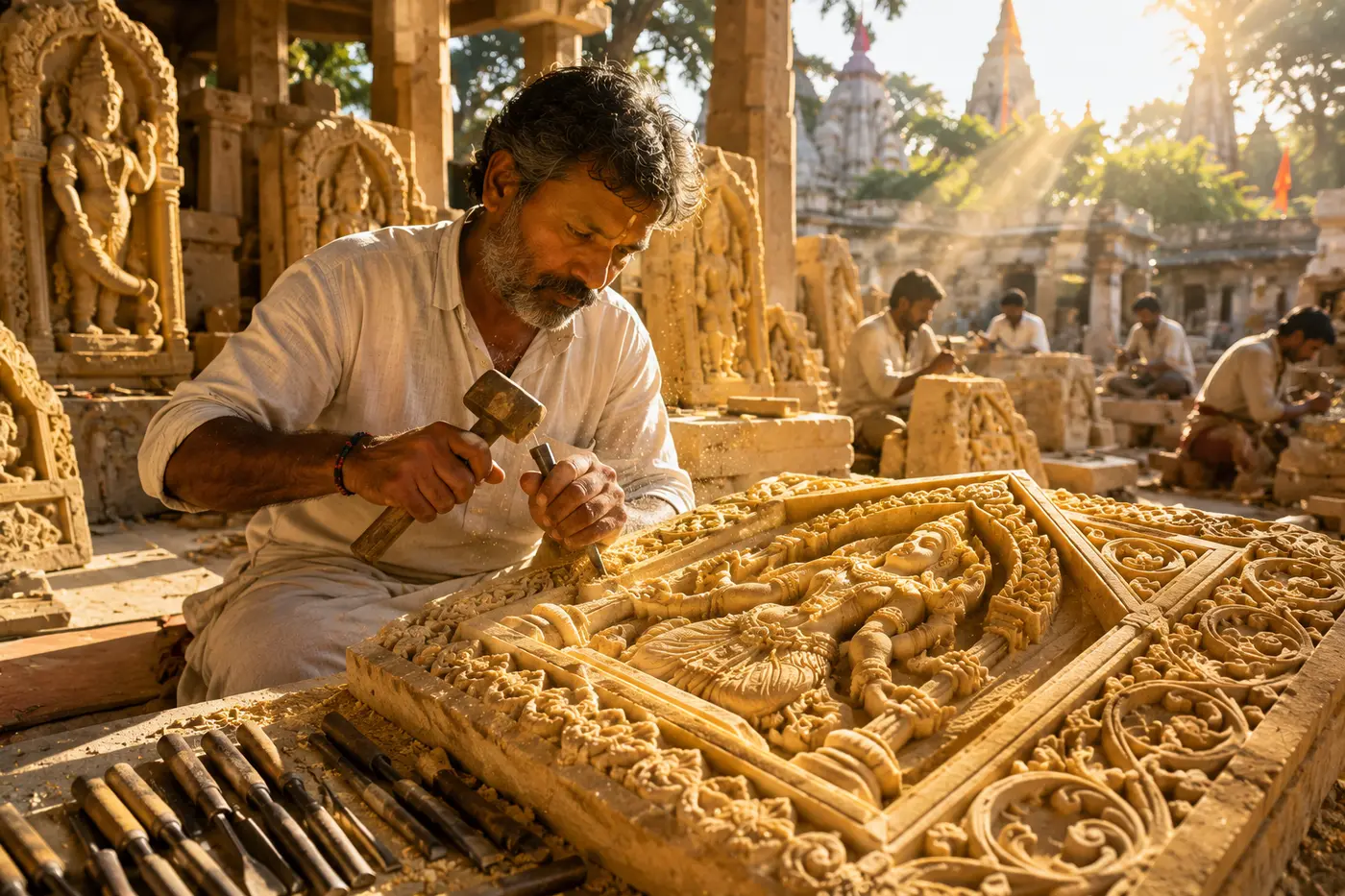
A tradition survives only while someone is practising it. The temple crafts of Bharat — stone carving, sculpture, mural painting, classical music and dance — are not exhibits to be preserved behind glass. They are skills held in living hands, passed from guru to shishya. Punyabhoomi is being envisioned as a place where that passing-on happens in public view.
Craft you can watch
The masterplan imagines working artisan spaces where visitors watch stone take the form of devotion — and where the next generation of karigars learns beside the masters. A souvenir street of genuine handwork is planned, so that what a pilgrim carries home carries a craftsman’s livelihood with it.
Stories on stage
A Ramayana theatre for live productions of the great epics, an immersive dome experience bringing sacred stories to life, a bhajan and kirtan hall for sankirtan and satsang, and open festival squares for utsav and mela — the cultural spaces are planned so that heritage is something you attend, join and sing, not merely observe.
Learning under the open sky
Gurukul gardens are envisioned for open-air learning — Gita, shastra and sanskar for all ages, taught the way this land has always taught: teacher, student, tree and sky.
Punyabhoomi is a visionary destination currently under development in Nashik. It is not yet open to visitors, and no bookings or payments are taken. To receive milestone announcements, sign up on our website or write to seva@punyabhoomi.org.